
In the field of iron mold machining, issues such as excessive vibration and low precision have long troubled manufacturers. This article will delve into how the bridge - type double - column structure can significantly enhance the rigidity and dynamic stability of machine tools through its fixed cross - beam and workbench design. We will also compare it with traditional vertical and gantry structures, and analyze the core advantages of the DC1113 CNC milling machine in heavy cutting and complex contour machining.
During iron mold machining, vibration is a major headache. It can lead to a series of problems, such as rough surface finish and dimensional deviations. For instance, in some traditional machining processes, the surface roughness can reach up to 3μm. However, due to vibration, the actual surface roughness may increase to 3.5μm, which is far beyond the required tolerance in high - end mold manufacturing.
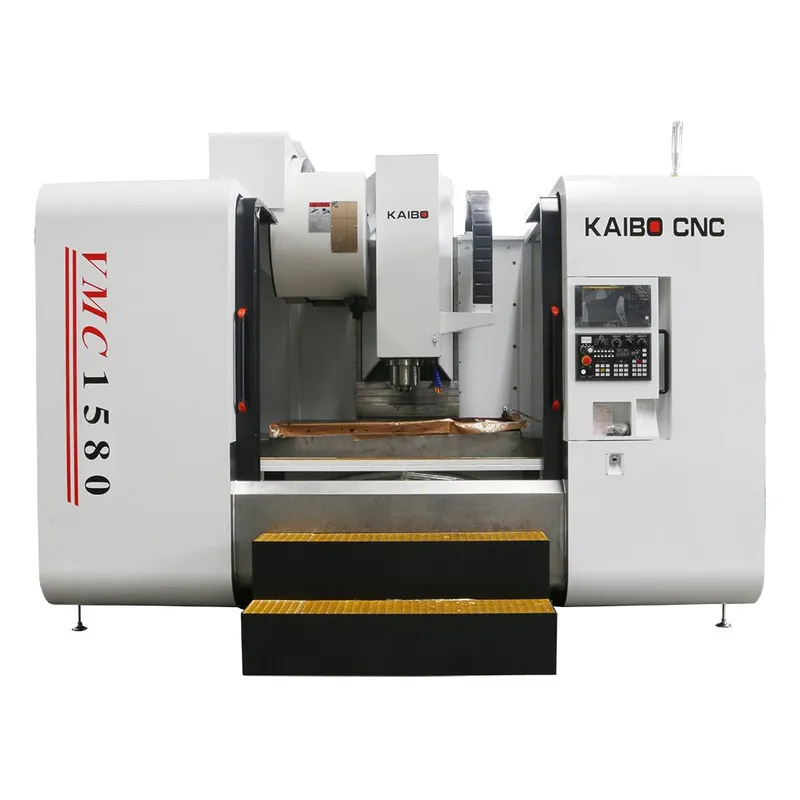
Traditional vertical and gantry structures have their own limitations. In vertical structures, the spindle is often subject to greater bending forces during heavy cutting, which can cause deformation and affect machining accuracy. Gantry structures, on the other hand, may have relatively poor dynamic stability, resulting in increased vibration during high - speed machining. In comparison, the bridge - type double - column structure offers better overall performance.
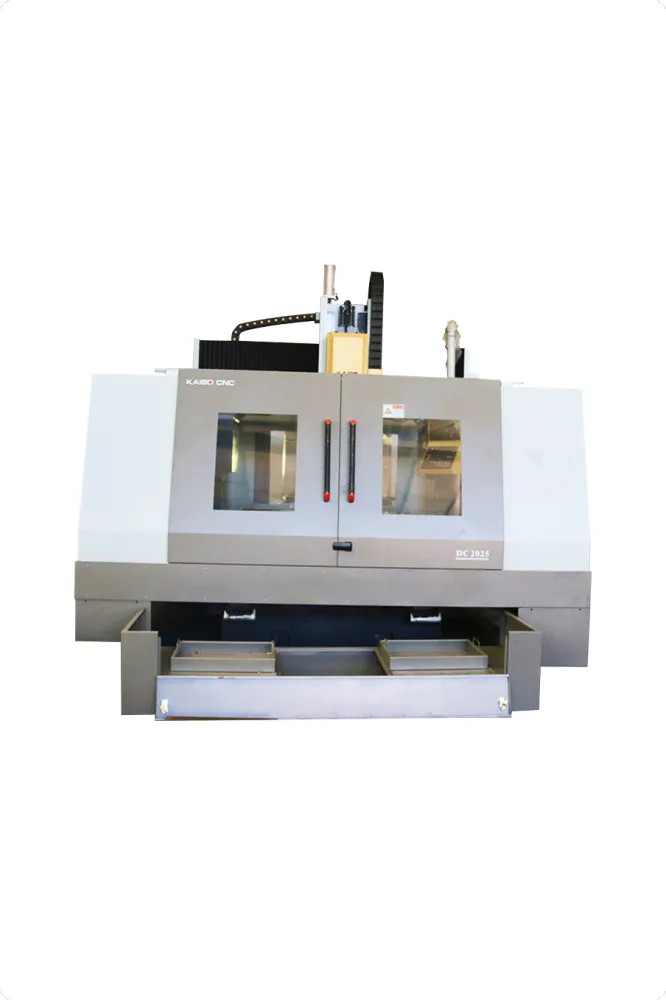
The bridge - type double - column structure features a fixed cross - beam and a workbench. This design effectively reduces the transmission of vibration. When the machine tool is in operation, the fixed cross - beam provides a stable support for the spindle, while the workbench can move smoothly, minimizing the influence of vibration on the machining process. As a result, the surface roughness of the machined parts can be reduced by about 0.5μm, and the dimensional accuracy can be improved by up to 0.01mm.
Let's take a look at some real - world applications. In the machining of large cast iron parts and inserts, the DC1113 CNC milling machine with the bridge - type double - column structure has shown excellent performance. For example, in a large - scale mold manufacturing company, after replacing the traditional machine tool with the DC1113, the production efficiency has increased by 30%, and the scrap rate has decreased from 5% to 2%.
To ensure the long - term stable operation of the machine tool, proper daily maintenance is essential. First, regular lubrication of the guide rails can reduce friction and wear, and improve the movement accuracy of the workbench. Second, controlling thermal balance is crucial, as temperature changes can cause deformation of the machine tool components. Finally, regular calibration of the machine tool can ensure its machining accuracy. For example, the guide rails should be lubricated every 8 hours of operation, and the machine tool should be calibrated at least once a month.
The bridge - type double - column structure provides dual assurance for production efficiency and product quality. It not only improves the machining accuracy and surface quality but also increases the production speed. With the DC1113 CNC milling machine developed by Kaibo CNC, which has 25 years of R & D experience and has served customers in many countries around the world, manufacturers can achieve better results in the highly competitive mold manufacturing market.
Do you have any questions about the stability of iron mold machining? Share your experiences and let's discuss together! If you are interested in learning more about the DC1113 CNC milling machine and the bridge - type double - column structure, click here to explore more.

 <#else>





