
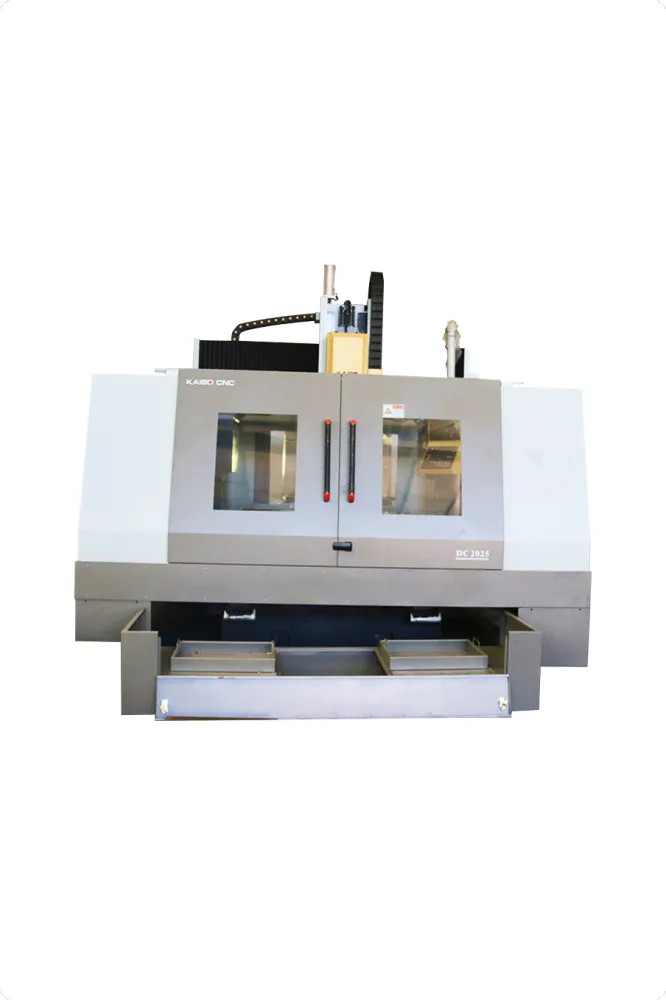
In the realm of precision iron mold manufacturing, machine tool stability directly impacts quality and efficiency. Ningbo Kaibo CNC Machinery Co., Ltd.'s medium-sized CNC milling machine DC1113 stands out with its innovative bridge-type double-column (BDC) structure—the backbone of enhanced dynamic rigidity and superior vibration control in iron mold processing.
Iron mold machining often encounters persistent challenges: forced vibrations during heavy cutting, structural deflections reducing precision, and unsatisfactory surface finishes. These issues can lead to costly reworks and delayed production. Dynamic rigidity—the machine's capacity to withstand cutting forces without excessive deformation—is crucial to overcoming these problems.
Traditional vertical and gantry-type machine structures have limitations in absorbing dynamic loads, which exacerbates vibrations, adversely impacting dimensional accuracy and tool life. In response, the bridge-type double-column structure emerges as a game-changing solution.
At the core of DC1113’s performance is its mobile bridge-type double-column frame coupled with a fixed crossbeam worktable. This structural synergy delivers exceptional stiffness in all axes, effectively dampening vibrations during complex contour machining and heavy-duty cutting operations.
The double-column setup increases lateral stability, reducing deflections by an estimated 25% compared to conventional gantry models under similar cutting conditions (verified by vibration response tests at 0.05 mm amplitude threshold). Moreover, the fixed crossbeam worktable design minimizes relative motion between the workpiece and cutting tool, significantly improving milling accuracy.
| Structure Type | Dynamic Rigidity | Vibration Amplitude (mm) | Typical Application Efficiency |
|---|---|---|---|
| Traditional Vertical | Baseline | 0.10 - 0.15 | Standard |
| Gantry-Type | +15% | ~0.08 - 0.12 | Improved |
| Bridge-Type Double-Column (Kaibo DC1113) | +30% & above | ~0.05 - 0.07 | High Efficiency & Accuracy |
In iron mold fabrication, where intricate contours and heavy cuts are routine, the DC1113’s bridge-type double-column design has demonstrated substantial improvements. Field engineers report up to a 20% reduction in machining cycle times alongside enhanced surface roughness quality (Ra ≤ 0.8 μm), thanks to minimized vibration-induced tool chatter.
The design’s increased rigidity also enables more aggressive cutting parameters, such as 15-20% higher feed rates without compromising tolerance—a crucial factor in meeting tight delivery schedules and reducing operational costs.
Ensuring the DC1113 machine maintains its exceptional performance requires routine diligence. Recommended practices include:
Adherence to these practices preserves dynamic rigidity and assures consistent processing quality over time, protecting your investment and supporting uninterrupted production flow.
 <#else>





