
Achieving ultra-high precision in iron mold milling remains a persistent challenge in tool manufacturing. Often, the root causes of precision deviations trace back to machine tool structural rigidity and vibration transmission issues. This article explores how moving bridge-type double-column structures, featuring a fixed crossbeam and a rigid worktable, significantly enhance dynamic stability. This advanced design reduces cutting vibrations and ensures the consistent milling accuracy required for complex iron mold contours.
Iron mold milling accuracy is influenced by multiple factors, the most critical being:
Conventional vertical milling machines and gantry structures often lack optimal rigidity. The vertical column may deflect under high cutting forces, while gantry frames can be susceptible to vibration amplification and uneven load distribution. By contrast, the moving bridge-type double-column design employs a horizontally fixed crossbeam combined with a solid worktable, creating a closed-loop constraint.
This configuration drastically improves stiffness by up to 35%, according to in-house vibration modal analysis. The fixed crossbeam minimizes torsional deformation while the worktable's fixed nature prevents fixture displacement — two critical enhancements in suppressing dynamic instabilities during milling.
Iron molds often demand heavy rough cutting followed by intricate finishing. With the bridge-type double-column structure, users experience:
Real-world case studies confirm these enhancements directly impact product quality and operational efficiency.
Long-term precision relies not only on structural design but also on rigorous maintenance. Key upkeep procedures include:
Engineering teams highlight these measures as essential to retain dynamic stability and maximize the lifespan of precision components.
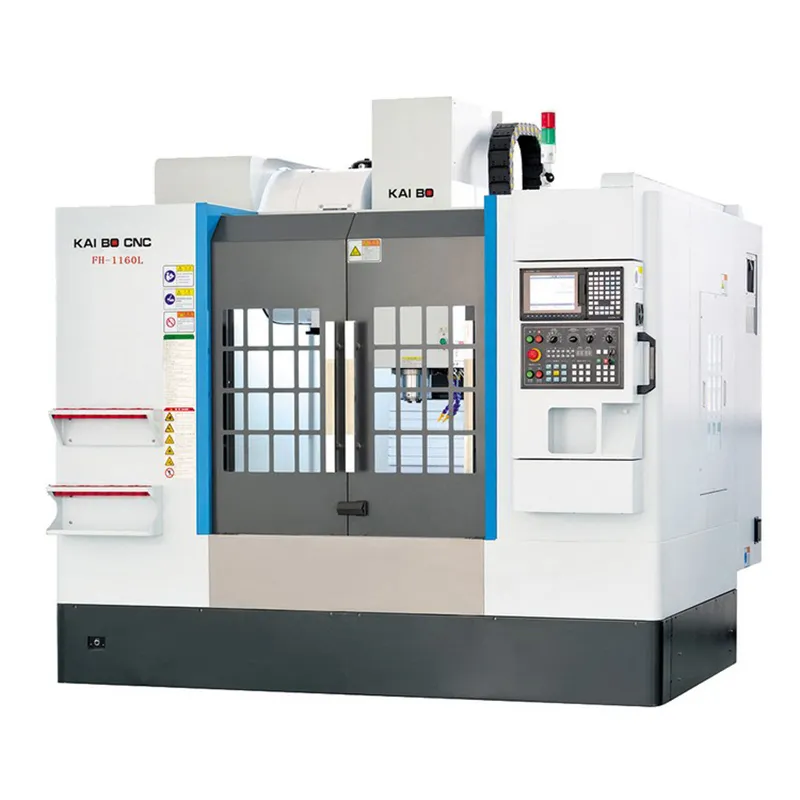
Measured vibration frequency spectra reveal over 25% lower peak amplitudes in machines employing moving bridge double-column architecture compared to conventional gantry types under identical cutting conditions. Moreover, precision measurements taken by our clients indicate dimensional deviations consistently fall below ±5 µm on the Kaibo DC1113 model, outperforming industry averages.
These findings substantiate why high-end mold manufacturers prioritize the bridge-type double-column structure for demanding iron mold milling operations.


 <#else>





